Meet Andrew Gatley at Red Plains: Civil Designer and Project Manager for the Shoalwater Bay Indian Tribe’s Upland Development Project
About Red Plains Professional, Inc.
Founded in 1997, Red Plains Professional is a multidisciplinary firm specializing in civil engineering, planning, GIS, grant writing and construction management. Red Plains serves as the Shoalwater Bay Indian Tribe’s prime consultant for the upland development, providing engineering, planning and GIS services and coordinating specialized project partners. Learn more at red-plains.com.
Check out the Story Map for more information about the Upland Development Project.
1. Can you introduce yourself and tell us about your role at Red Plains?
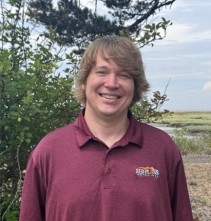 My name is Andrew Gatley, and first and foremost, I am a builder. My mom jokes I was born with a hammer in my hand, and she has the photos to prove it. I started in construction at 17 as a laborer, worked my way into carpentry, and later went back to school for civil engineering. That combination of field experience and engineering still shapes how I approach design today. I do not want to design something that only looks good on paper. I want to understand how it will be built, how it will function, and how it will hold up over time.
After graduating from Cal Poly Pomona, I worked on large commercial projects in Los Angeles and later moved to the Pacific Northwest, where I worked on large master-planned residential communities.
My brother-in-law Nick, who is also a civil engineer, joined Red Plains a year before I did and encouraged me to interview. I wish I had listened sooner, because I couldn't have imagined a better fit. During my interview, I learned more about the Shoalwater Bay Indian Tribe Upland Development Project and realized it was a unique opportunity to bring together nearly every part of my background.
My role is civil design and project management, and the majority of my time is spent working on this project.
2. What does your work on the upland development project involve?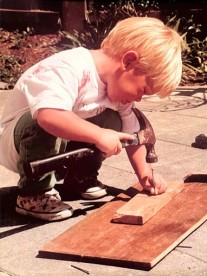
Red Plains serves as the prime consultant, providing civil engineering, planning, and GIS services while coordinating specialized subconsultants. I manage several of those subconsultants and lead civil design efforts for each phase of the project.
I sometimes describe civil engineering as "everything outside the building." Our job is to put the infrastructure in place that makes future development possible. That includes roadways, grading, stormwater, water and sewer utilities, street lighting, retaining walls, and lot layout.
Just as important is coordination. Surveyors, engineers, environmental consultants, planners, agency reviewers, and others all have pieces of the puzzle. Those pieces cannot be developed in silos. A big part of our job is making sure everyone's work fits together, conflicts are resolved early, and the design moves forward as one coordinated, constructible plan.
3. What has kept you committed to the Shoalwater Bay Indian Tribe’s upland development project and the work ahead?
Red Plains has been working with the Tribe since 2008 (18 years), and I have been working on the upland development project since my first day at Red Plains.I immersed myself in it as quickly as I could because it immediately felt different from anything I had worked on before.
I have been fortunate to work on some very large projects, but I learned quickly that size alone does not make a project meaningful. What matters to me is being able to see how the work improves people's lives and knowing that the decisions we make today will have a lasting benefit.
The upland development project offers that in a way very few projects do. This is not a single road, building, or utility project. It is the foundation of an entire future community. I get to use the full range of my experience while helping turn a largely undeveloped site into a place where the Tribe can live, grow, and thrive for generations. I still have days when I look at the master plan and think about how lucky I am to work on something like this. That feeling has not worn off.
4. What's happening behind the scenes that those not directly involved may not realize is necessary before construction can move forward?
There are hundreds of people working behind the scenes to move this project forward, including the Shoalwater Bay Indian Tribe's Planning Department, Red Plains, our design partners, and numerous sub-consultants and regulatory agencies. Much of the work the community never sees happens years before construction equipment arrives on site.
The process includes long-range planning, funding and grants, environmental review, surveying, engineering, agency coordination, and countless design decisions. All of these pieces have to work together. A roadway elevation affects drainage. Drainage affects utilities. Utility sizing affects how much future development the system can support. A waterline installed today may eventually serve homes, a school, emergency services, cultural and public facilities, and development that may not be built for years.
From the outside, a quiet site can sometimes look like nothing is happening. In reality, a project can be moving forward every day even when the community does not yet see construction. Before a shovel goes into the ground, there can be tens of thousands of hours of planning, design, coordination, funding work, environmental review, and agency approval behind it.
We are making decisions about infrastructure that may serve the Shoalwater Bay Indian Tribe for the next 50 years or more. The goal is to solve those problems now rather than after something has already been built.
5. You've worked on a variety of development projects throughout your career. What makes this project especially meaningful to you?
Over the course of my career, I have worked on stadiums, hospitals, schools, public safety facilities, residential developments, and very high-end private projects. Those experiences taught me that the size or price tag of a project is not what makes it meaningful.
Early in my engineering career, I worked on an ultra-luxury hotel development. From a technical perspective it was fascinating work, but I struggled with the purpose behind it. I remember a discussion about relocating a major waterline at a cost of roughly $14 million, and the response was, "I guess we'll have one less painting in the lobby."
There was nothing inherently wrong with designing a luxury hotel, but that experience clarified what I wanted from my own career. I wanted to build things with a human purpose. I wanted the long hours, deadlines, and stress that come with this work to add up to something that genuinely improves people's lives.
That is why this project means so much to me. We are helping create a safe place for a community to continue to grow and thrive. Much of what we are designing will serve people decades from now, including people I may never meet.
6. When you think about the future upland community, what do you hope it represents for future generations of the Shoalwater Bay Indian Tribe?
I hope it represents safety, resilience, sovereignty, and opportunity for community growth for generations to come. The roadway and utility infrastructure are only the first steps toward a complete community that can include housing, cultural facilities, education, health care, emergency services, and other systems a sovereign community needs.
The technical work matters because it supports human needs. Today, if tsunami sirens sound, families may have only moments to make life-and-death decisions: Where is everyone? Is someone at Grandma's house? Does everyone have a way to get uphill? What happens to power and water afterward? Those questions are very real, and they influence the planning and design happening now.
To me, resilience looks like a family hearing the sirens and knowing their loved ones are safe, and a community knowing it can stay connected and continue to function when it matters most.
7. What does being a trusted partner to the Tribe mean to you?
At the most basic level, being a trusted partner means listening carefully, understanding the community's priorities, and carrying those priorities into the design. Our role is not to impose our vision. It is to bring our technical experience to the Tribe's vision and help turn it into something that can be funded, approved, built, and maintained for the long term.
Trust also shows up in small moments. When Eagle Hill Road experienced a landslide last winter, Red Plains’ leadership responded immediately and pulled all hands on deck to evaluate the issue and provide guidance. There was no discussion of whether a contract was in place or where to bill the time. The direction was to drop what we were doing and help.
That kind of trust is earned slowly through listening, technical competence, responsiveness, transparency, and follow-through. My goal is to keep earning our role as a trusted partner and serve the Tribe to the same standard I see demonstrated by the team around me.
8. When you're not working, what do you enjoy doing?
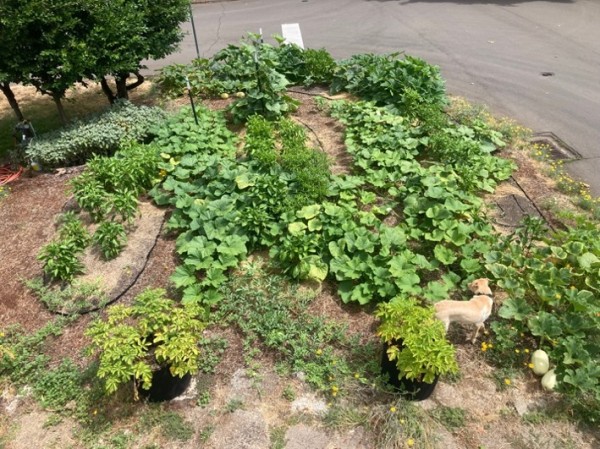
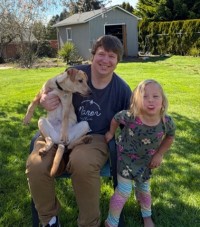 I often joke that my life is made up of three things: my job, my dog, and my garden. My dog Roger is a rescue puppy and a 17-breed super-mutt. Some people may have met him at Community Day when he joined me at the Red Plains booth.
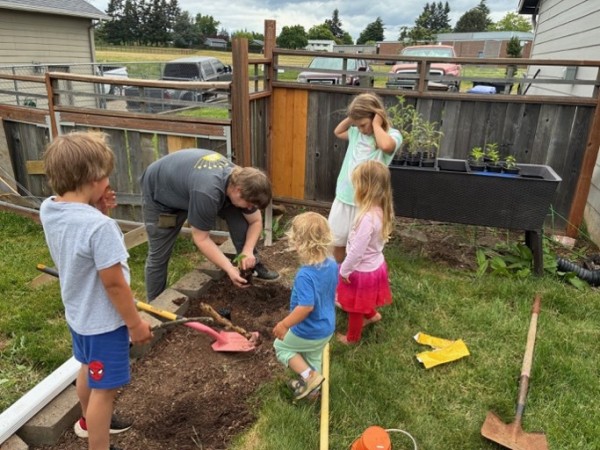
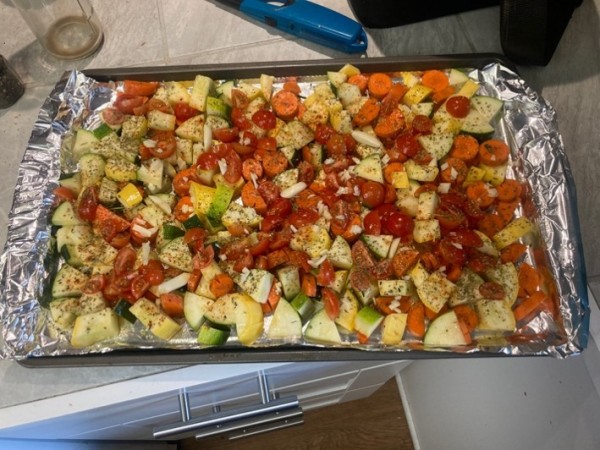
I also love gardening and cooking. Engineering and project management involve keeping a million puzzle pieces moving at once, so gardening provides a chance to slow down and work with my hands.
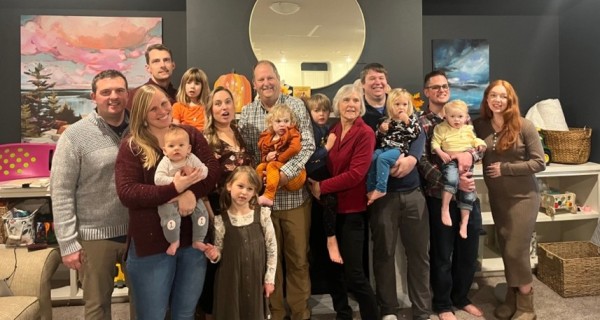
Most importantly, I enjoy spending time with friends and family. I have three siblings and eight nieces and nephews nearby, and many weekends involve grilling and family gatherings. My grandmother's motto was, "There is always room at the table," and I try to carry that with me.
Pictured above and below: Andrew with his family and Roger along with images of his garden and cooking.