By James Anderson
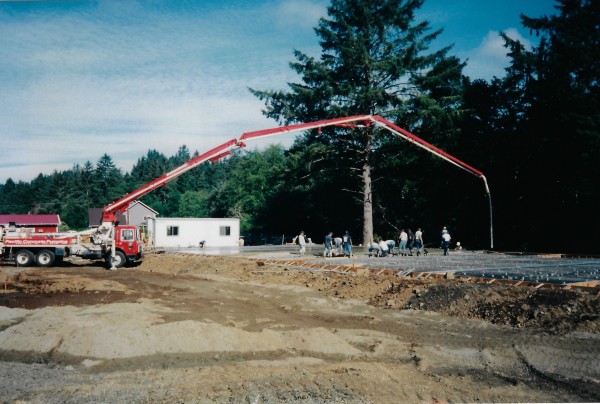
1988 Indian Gaming Regulatory Act (IGRA) was created. It formalized tribal gaming in the US and established the National Indian Gaming Commission (NIGC) to regulate tribal gaming. In the early 1990s while I was on tribal council, we discussed opening a casino and tried very hard to find an investor to loan the tribe the money to build a casino. Several years passed by. Eventually, in 1997 an investor came through. On July 17, 1997, the building of the casino started.
In early 1998, Shoalwater Bay Bingo & Casino opened. There were some legal challenges pending during our first year open. We had some non-compacted machines on site. They didn’t fit the legal definition of Class II or Class III and the NIGC and State argued these machines were illegal, so in September of 1998 after many more court arguments, Federal Marshall’s drove in two semi-trucks and confiscated 108 gaming machines. These Federal Marshall’s were forced to roll each machine through a gauntlet of tribal and community members from all around protesting the confiscation and the loss of jobs.
In the following weeks, the Tribe brought in some less quality gaming devices to replace the confiscated ones, again these were non-compliant by NIGC or State standards, but it was decided, in a good faith effort, that we could keep operating them until we came to a decision in court.
We nearly gave up and closed our doors, but in 2002 it all changed. The Tribal Council agreed with Tribal Gaming Commission to request negotiation of a gaming compact with the Washington State Gaming Commission (WSGC). The Tribal Council Chair and Tribal Gaming Commission Chair met with WSGC in Ocean Shores and the process was started. They were quite surprised to see us there that day to discuss negotiation of a Tribal-State gaming compact. The Tribal Chair, Sonny Johnson, signed the compact with Washington State in July 2002. The Tribal Gaming Commissioners began developing Tribal Minimum Internal Controls Standards that set up the framework for the casino to develop their Minimum Internal Controls Gaming Standards, their Policy & Procedures, game rules, and to prepare for the Class III Table Games and the Tribal Lottery System (TLS) gaming devices.
By October 2003, following an inspection, the casino was now in compliance with Federal, Tribal and State regulations, however the state wanted us to remove our non-compacted machines from the casino floor first before they would allow us to bring in the TLS devices for set up. We requested that we not be forced to shut down the operation to do this and so we compromised by removing half the non-compacted machines off the floor and replacing them with TLS. Once the TLS were ready to operate, we turned off the other half of casino’s non-compacted machines while turning on the new TLS devices. We then removed the rest of the non-compacted machines and replaced them with TLS. We kept the operation running, never having to close the business at any time. Employees had by then been retrained and relicensed under the Tribe’s Gaming Ordinance, NIGC, and WSGC and a smooth transition occurred as we converted from a non-compacted gaming operation to a Class II and Class III gaming operation.
Since then, our casino has helped to fund tribal government operations, such as police, courts, education, housing, social services, health, elderly support, charity, and economic development focusing on tribal self-sufficiency.
The casino continues to be a successful endeavor and is one of the larger employers in Pacific County today. It has helped the tribe to diversify its growth in business opportunities.
“I am proud to have been involved from the very beginning—first on council during the early planning stages in the 1990s, then helping bring the casino to life when we began building it on July 17, 1997, and then on the opening day in early 1998. To remain part of its success today means a great deal to me. This casino has been one of the greatest opportunities to support our tribe financially and a powerful example of how we give back to our surrounding community by providing entertainment, jobs, and opportunities.”
— James Anderson, Tribal Gaming Regulatory Agency Director for the Shoalwater Bay Tribe
“The Casino is one of the largest employers in Pacific County. It’s also been the main source of revenue for the tribe for the last 20+ years, that’s not tied to federal money and or grants.”
— Cody Blair, Tribal Gaming Agent for the Shoalwater Bay Tribe